- Summary
KYIV, June 12 (Reuters) – Warfare in Ukraine and beyond faces a paradigm shift in the coming years as artificial intelligence systems integrate into unified networks that speed up decisions on the battlefield, a senior Ukrainian official said.
Ukraine, in the fifth year of fighting a full-scale Russian invasion, is already using AI for a plethora of battlefield functions, from flying drones at targets to helping plan combat operations and crunching data on Russian missile attacks.
“AI will form a new paradigm of warfare. It’s already actively doing so,” Danylo Tsvok, the head of the defence ministry’s AI centre, told Reuters.
He predicted AI systems would eventually be unified into a single network overseeing the battlefield, leading to a “war of operating systems” with Russia in the next three to five years, if the conflict continues.
“The system that possesses more data and better understands that data, proposes solutions — that system will gain the advantage over the other,” he said.
The centre was founded in March as Defence Minister Mykhailo Fedorov seeks to put AI and data-driven decision-making at the heart of Ukraine’s defences.
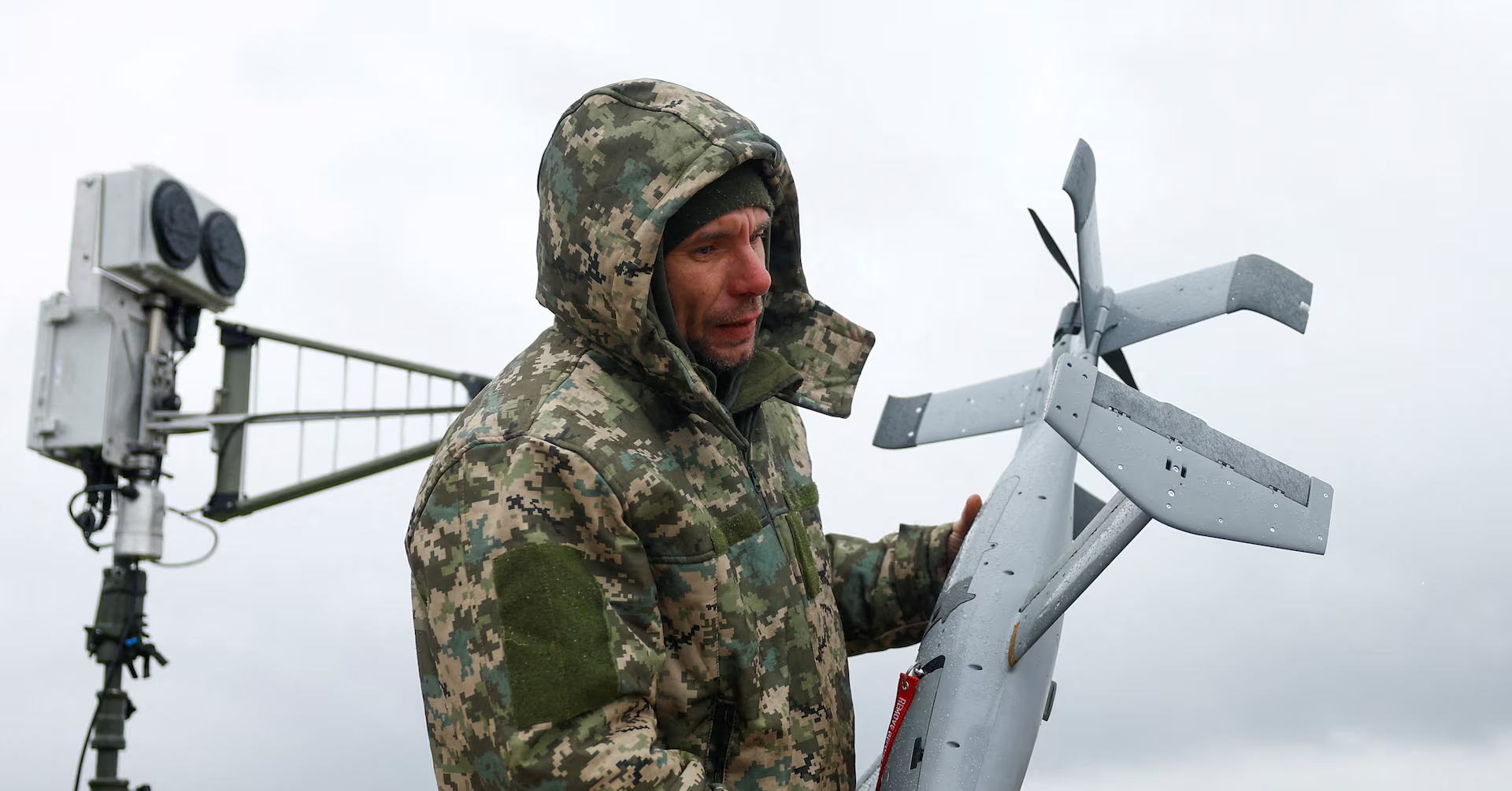
Drones, still mostly flown by pilots, have already upended the way the war is being fought.
Ukrainian and Russian troops launch thousands of unmanned aerial vehicles (UAVs) a day at each other. Kyiv is also trying to solve its frontline troop shortage with ground robots.
The ability of drones to constantly surveil the battlefield and hit targets with precision has accelerated the “kill chain” – the process of planning and executing a strike on the enemy. AI decision-making would speed this up even more, Tsvok said.
TECHNOLOGICAL ARMS RACE
Ukraine, whose military numbers around a million personnel, is already using AI tools in its command systems.
But Tsvok said the goal was to create a single operating system to recommend battlefield decisions all the way up from individual frontline units to strategic command.
This would significantly speed up the analysis of data from the 1,200-kilometre (750-mile) front line to allow recommendations to human commanders, he said.
The aim, Tsvok said, is to unite weapons and data systems into “one single living organism that can operate in a coordinated manner.”
The technological arms race launched by Europe’s largest war since World War Two, which lasted from 1939 to 1945, has attracted interest from foreign AI companies hungry for combat data to