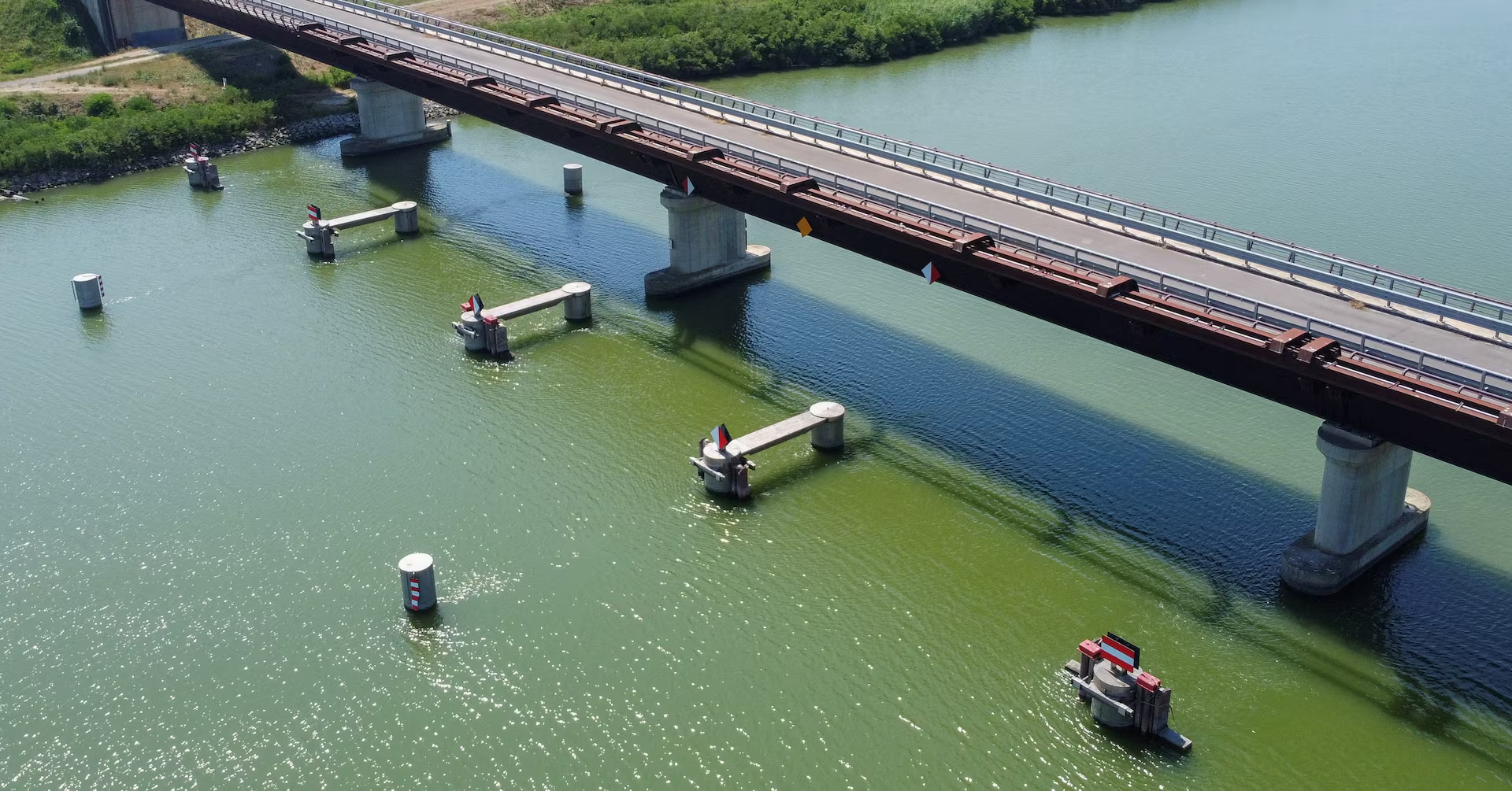
PORTO TOLLE, Italy, June 27 (Reuters) – The flow of Italy’s Po has dropped dramatically in less than two weeks as a result of the heatwave gripping Europe, allowing salty seawater to advance as far as 18 km (11 miles) inland and raising fears for the delta’s agriculture and protected wetlands.
At the last point before the Po branches into several channels feeding into the Adriatic Sea, the flow has dropped from some 1,000 cubic metres per second to below 300.
While engineers have been tackling the so-called salt wedge for years, barriers built in the 1980s to limit the intrusion of seawater are proving insufficient.
“We are seeing an increase in the frequency and intensity of extreme events, which we are also observing here,” said Rodolfo Laurenti, director of the Po Delta Reclamation Consortium, which manages and safeguards water resources.
While the river appears to be normal, saltwater has been infiltrating it, drying out the environment and damaging crops at a crucial juncture in their growing cycle.
“Without this primary resource, we don’t know whether these crops will complete their cycle and whether we’ll be able to harvest them,” said local farmer Federica Vidali, whose soybeans, alfalfa and sunflowers need large amounts of water.
Irrigation canals are being shut to prevent saltwater from burning crops, a measure also affecting maize and rice growers.
A similar crisis hit after a severe drought in 2022, but farmers say this year is more alarming because of how early the phenomenon has appeared.
“The minimum value below which it was thought the river’s flow could never fall has, in fact, more than halved at the moment,” Laurenti said.
Read more Defence spending chokes Russia to stagnation
Read more Rising heat, falling chips and sticky prices: The financial week in five charts
Read more Strong earthquake hits Hindu Kush, shaking Afghanistan and Pakistan