- Summary
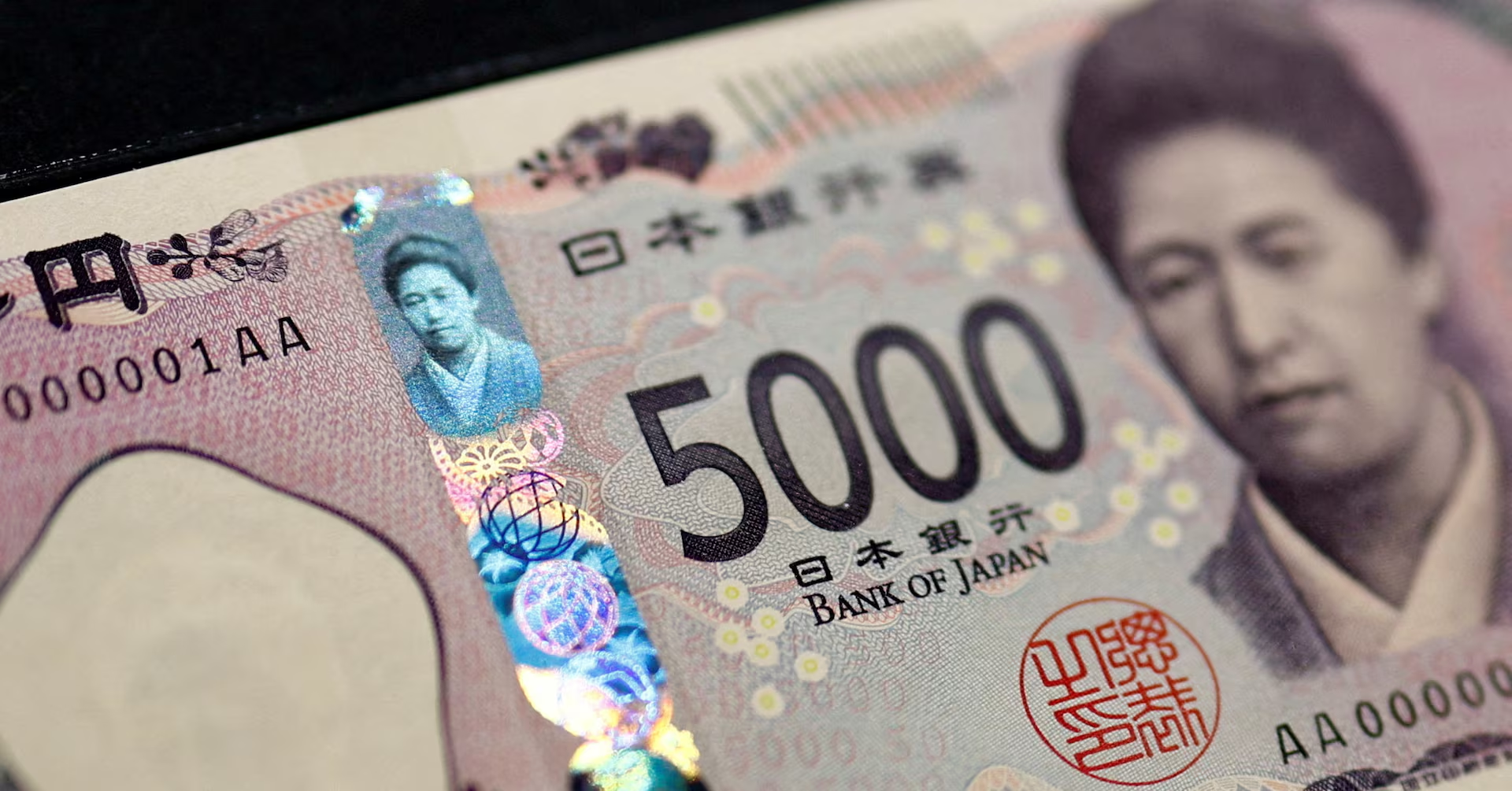
SINGAPORE, June 30 (Reuters) – The yen slumped to levels not seen since 1986 on Tuesday, stoking worries that direct intervention from Tokyo was around the corner, while the dollar backed away from 13-month highs ahead of jobs data that could influence the U.S. rate outlook.
The yen weakened to 162.41 per dollar for the first time in 40 years on Tuesday. Japanese Finance Minister Satsuki Katayama reiterated the authorities stood ready to respond appropriately at any time, refraining from stronger rhetoric.
The Japanese currency was set for a 2% drop in the second quarter, its fourth straight quarter of decline, its longest such streak since 2022, when it fell for seven consecutive quarters, as a wide interest rate gap drags on the yen.
“It’s a question of when, not if, the Ministry of Finance (MOF) intervenes again to support the yen,” said Carol Kong, currency strategist at Commonwealth Bank of Australia.
“However, any intervention is unlikely to reverse the broader uptrend in USD/JPY,” said Kong, who expects the yen to hit 164 per U.S. dollar by early 2027.
YEN’S FIGHT AGAINST THE TIDE
The yen has shrugged off bouts of intervention worth 11.7 trillion yen ($72.25 billion) and interest rate hikes from the Bank of Japan in the past few months as the Iran war stoked inflationary worries and derailed the global rates outlook.
Speculators have also been emboldened, steadily rebuilding their net short positions on the yen, with the latest weekly data from a U.S. regulator showing short positioning of $11.3 billion, near the highest in two years.
While the intervention in late April and early May strengthened the yen for a brief period, it came back under pressure as traders started to price in rate hikes from the U.S. Federal Reserve later this year.
That sharpens the focus on Thursday’s U.S. jobs report for June as three consecutive months of stronger-than-expected payroll gains have supported the Fed’s hawkish shift. Traders are pricing in a 63% chance of a rate hike by September.
“(Japan’s) MOF will intervene if they can, but they can’t, as they know they’re currently swimming against the tide of a hawkish Fed,” said Matt Simpson, senior market analyst at StoneX.
“If U.S. data throws a surprise gift for Fed doves this week, the MOF could burst into action with momentum of a weaker dollar on their side,” he said. “Until then, it’s likely just talk.”
DOLLAR STANDS FIRM
The dollar index , which measures the U.S. currency against six other units, clawed back some of its overnight losses to be last at 101.28, set for a 1.4% rise in the quarter after gaining 1.6% in the first three months of 2026.
Investors have loaded up on bets on continued dollar strength at their fastest pace on record for the first half of the year, data showed, casting a shadow over other currencies.
The euro dipped 0.18% to $1.1403, not far from the one-year low it hit last week. The Australian dollar dipped 0.27% to touch a three-month low of $0.6867 while the New Zealand dollar fetched $0.5644.
Sterling softened 0.17% to $1.3237 as investors weighed comments from Andy Burnham, Britain’s likely next prime minister, suggesting he would commit to a series of fiscal rules that financial markets monitor.
“The question is no longer whether the dollar can hold its ground, but what dollar strength means for risk assets,” strategists at BlackRock Investment Institute said in a note.
They cautioned that current dollar levels are broadly in line with underlying fundamentals, making a sustained appreciation cycle less likely. “We think some of the hawkish repricing in rate expectations may be overdone,” they wrote.
Investors were also digesting a Supreme Court ruling blocking President Donald Trump from firing Fed Governor Lisa Cook, allaying some concerns over the Fed’s independence.
Meanwhile, Iranian and U.S. negotiating teams were due in Doha this week, but Iran said no meeting had been scheduled as weekend missile fire from both sides tested the interim ceasefire to end the four-month-old war, leaving sentiment fragile.
($1 = 161.9300 yen)
Read more The construction failures and risky geography behind Venezuela’s quake tragedy
Read more Fuel shortages spread to more parts of Russia as Ukrainian attacks bite
Read more Stalled US permits threaten $121 billion in wind and solar investment, report shows