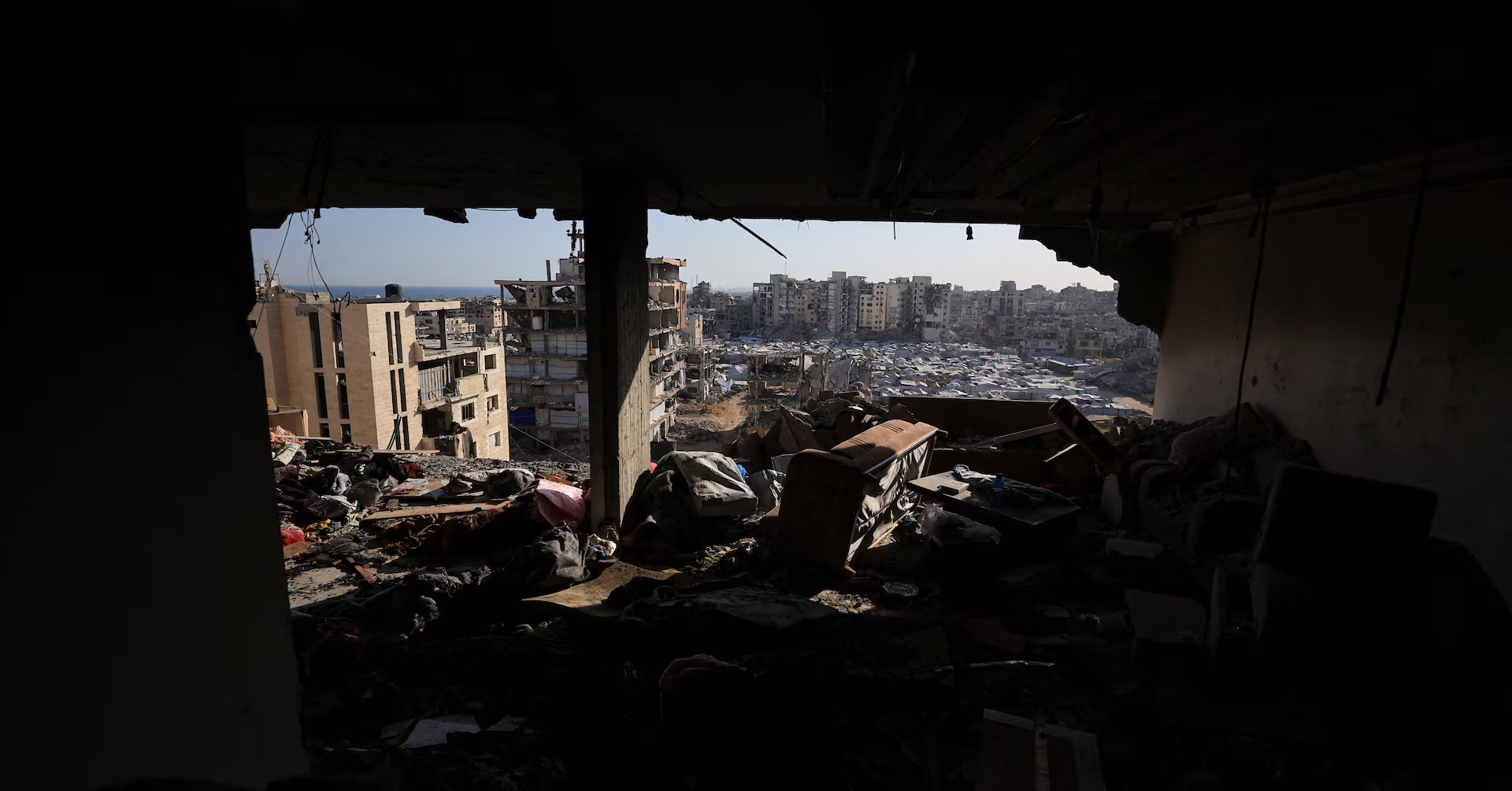
June 4 – Residents of Gaza, south Lebanon, northern Israel and Kuwait were all under fire this week despite U.S.-arranged ceasefires supposedly in force in their regions.
Israeli airstrikes hit Gaza and Lebanon, with Israeli forces still actively deployed in both places. Hezbollah rockets struck northern Israel, and Iranian attacks targeted Kuwait’s international airport.
The continued violence prompted U.S. President Donald Trump to comment on Wednesday that ceasefires in the Middle East involved “shooting in a more moderate manner” rather than a total halt in fighting.
Three truces his administration has negotiated were meant to have stopped the warfare. But while major fighting has greatly reduced, munitions are still falling and people still dying.
This is how the ceasefires – and ongoing fighting – are playing out:
WHAT’S HAPPENING WITH THE CEASEFIRE IN GAZA?
The United States brokered a ceasefire between Israel and Hamas on October 10, 2025, ending major warfare.
The ceasefire deal involved a halt to all fighting, Hamas releasing all its remaining hostages in Gaza, Israel freeing Palestinian prisoners, a phased Israeli withdrawal, ramped-up aid and the opening of a crossing into Egypt.
A Trump plan to build out the ceasefire was meant to involve agreements on disarming Hamas, a new Gaza government without the group’s involvement, reconstruction of Gaza and a complete Israeli withdrawal.
However, while all hostages were released, the two sides dispute how much aid Israel has allowed in. Hamas has not agreed to disarm. No significant reconstruction has begun, and Israel says it wants to expand the territory it controls in Gaza.
Israeli air strikes on Gaza have continued, killing more than 900 Palestinians since the truce including nine on Thursday. Sporadic Palestinian militant attacks have killed four Israeli soldiers in Gaza.
WHY IS THERE STILL WARFARE IN LEBANON?
After fighting in 2024, a ceasefire between Israel and Lebanon’s Iran-backed Hezbollah was only partially implemented, with both sides accusing the other of violations.
Open warfare began again in March after war against Iran erupted, with Hezbollah firing into Israel and Israeli forces seizing swathes of southern Lebanon and pounding other areas with airstrikes.
Trump announced a 10-day ceasefire in Lebanon on April 16 after rare contacts between representatives of the Israeli and Lebanese governments. Intense fighting continued in the south, but Israel mainly refrained from striking Beirut.
Since April 16, Israeli strikes have killed hundreds of people, bringing the total toll to more than 3,500 since March 2, according to Lebanese authorities, whose data does not distinguish between civilians and combatants. Israel says 26 of its soldiers and four civilians have been killed in Hezbollah attacks since March.
Iran wants a ceasefire in Lebanon to be part of any deal to end its war with the United States and Israel and to reopen the Strait of Hormuz.
On Wednesday, Trump announced that Lebanon and Israel had agreed to implement a new ceasefire contingent on Hezbollah leaving southern areas. The group has rejected that plan and fighting has continued.
WILL THE US AND IRAN CEMENT THEIR CEASEFIRE?
The U.S. and Israel attacked Iran on February 28, seeking to destroy its nuclear and ballistic missile programmes. Both countries voiced hope the ruling theocratic system would be overthrown.
That followed a 12-day war last year in which Israel, later joined by the United States, struck many of Iran’s nuclear facilities and military leaders.
Despite many of Iran’s senior figures being killed, it has managed to close off the Strait of Hormuz, throttling Gulf energy exports and hitting the global economy.
The United States announced a ceasefire with Iran in early April, with talks to follow on a lasting end to hostilities, the reopening of Hormuz, the end of a U.S. blockade on Iranian ports and a pathway to negotiations on Iran’s nuclear programme.
However, despite repeated rounds of indirect talks mediated by Pakistan and Qatar, there has been no fuller agreement yet. A deal would likely put off negotiation on the nuclear issue to a later stage.
Meanwhile, the sides have repeatedly exchanged fire, with Iran also targeting Gulf states including Kuwait this week.
WHY HAVEN’T THE CEASEFIRES BEEN EFFECTIVE?
All three deals have come unstuck in their first phase, with interim arrangements failing to move towards more lasting ceasefires.
In each case, the combatants have been unwilling to accept painful concessions required to move beyond the first phase of transitional ceasefires. At times, they have turned to military action to try to advance goals they had to set aside when the truces were agreed or to test the boundaries of the agreements.
“When there’s no movement and there’s no political horizon, it’s very difficult for a ceasefire to hold, because there’s no real incentive for the parties to that ceasefire to continue abiding by it if it doesn’t actually lead to any changes,” said Urban Coningham, research fellow at the Royal United Services Institute in London.
The diminishing influence of international bodies like the United Nations and the growing assertiveness of regional powers have also made it harder for long-term agreements to stick, he said.
Read more Ukrainian strikes kill four in Crimea, Russian officials say
Read more All EU members greenlight first step in accession talks, Ukraine PM says
Read more New York Democrats take first step toward new U.S. House map for 2028