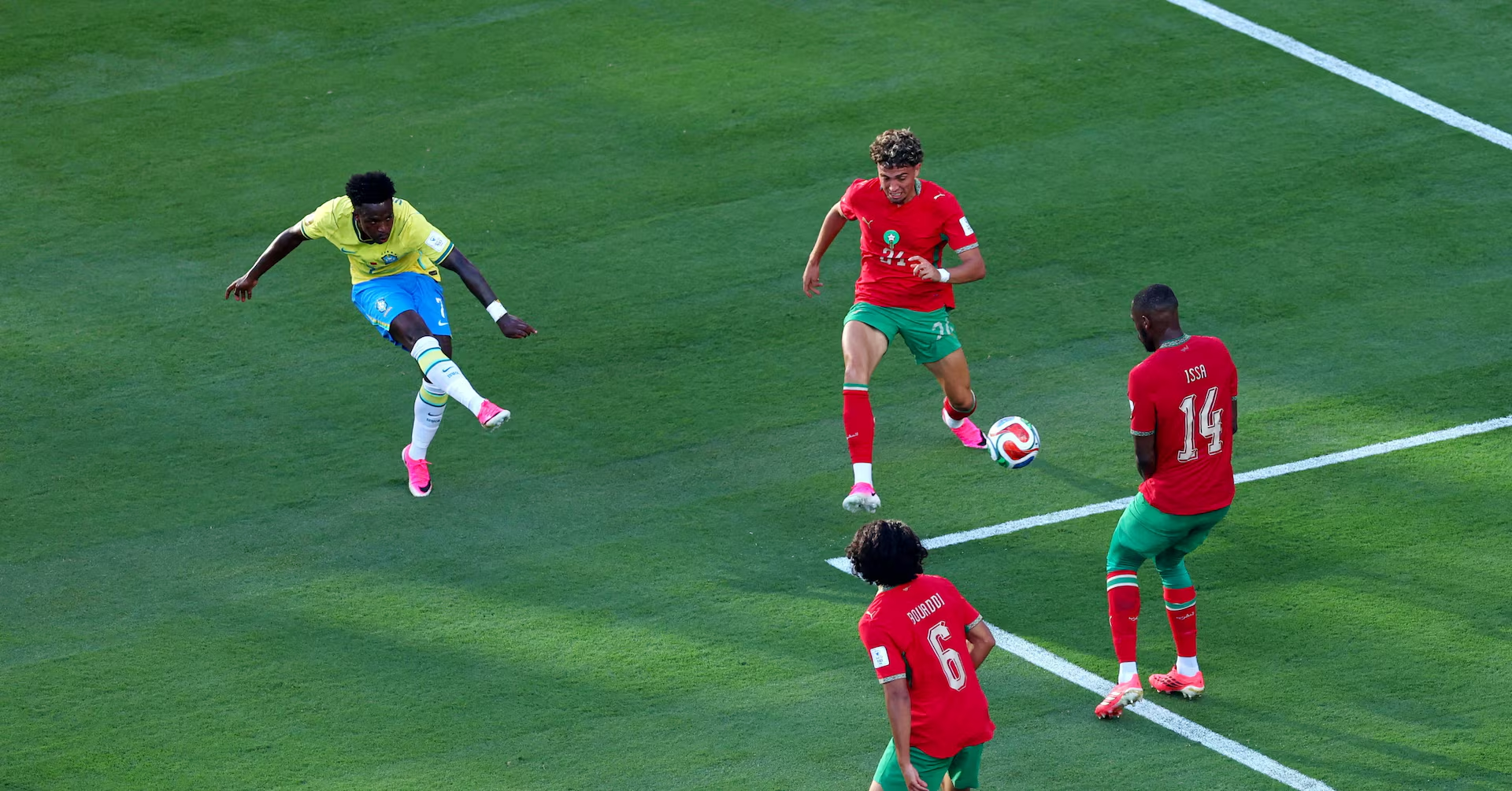
EAST RUTHERFORD, New Jersey, June 13 (Reuters) – Brazil endured a dismal opening 30 minutes against Morocco, with the World Cup giants appearing bereft of ideas before Vinicius Junior hauled them back into the contest with a flash of familiar Real Madrid magic.
Some Brazilian observers called it the team’s worst spell of football since the 7-1 loss to Germany in 2014, though unlike that national trauma, Saturday’s stumble will likely prove inconsequential.
Vinicius’s trademark surge down the left and sublime finish rescued Brazil after Ismael Saibari had given Morocco a deserved lead, preventing a first-half wobble from turning into something far more damaging.
For Carlo Ancelotti, however, the draw left a pile of uncomfortable questions before Friday’s match against Haiti. Brazil’s problems had been advertised well in advance of the tournament: a midfield short on creativity and control, and a glaring lack of specialist fullbacks.
Those concerns were sharpened by Ancelotti’s squad makeup. He selected only five midfielders in his 26-man group and just one specialist right back, Wesley, who was later ruled out through injury.
Instead of replacing him with another right back, Ancelotti called up an extra midfielder, leaving two centre backs to contest a makeshift role.
Against Morocco, that gamble looked reckless. Roger Ibanez, the Saudi Arabia-based centre back asked to operate on Brazil’s right side, endured a miserable first half, struggling with the pace of Noussair Mazraoui and Bilal El Khannouss and misplacing routine passes.
Brazil’s right flank became a Morocco playground, with Lucas Paqueta also struggling badly. It was a breakdown between Paqueta and Ibanez that helped create the move leading to Saibari’s goal.
CASEMIRO CONCERN
Yet the performance that may worry Ancelotti the most came from Casemiro.
The 34-year-old midfielder, expected to be one of Brazil’s anchors after a good season with Manchester United, repeatedly lost possession, misplaced passes and was caught out of position.
Ancelotti acted at halftime, replacing Ibanez and Casemiro with Danilo and Fabinho. The changes steadied Brazil almost immediately.
Danilo brought calm to the defence, while Fabinho, formerly of Liverpool, restored shape and authority in midfield. Brazil looked far more balanced after the break and controlled long spells, creating enough chances to suggest they might yet win.
There was also an attacking rethink. Ancelotti’s decision to start Brentford striker Igor Thiago ahead of Matheus Cunha, Luiz Henrique and Endrick did little for Brazil’s rhythm. The forward looked lost in translation, struggled to combine with Raphinha and Vinicius, and made little impact before being withdrawn.
The introductions of Cunha and Luiz Henrique, alongside Fabinho and Danilo, gave Brazil sharper movement, better passing options and a clearer attacking structure.
The Italian accepted Brazil had fallen well short, while urging calm after a ragged opening night.
“I think we have to reassess what we did in this first match. We didn’t play well,” Ancelotti told a press conference.
“There were a few issues: the team was unbalanced, we lost several balls, and we have to do better in that regard. We improved in the second half, but we cannot lose heart.
“This is the first match of the World Cup and we can’t judge ourselves as if the team should be perfect from the outset.”
The dilemma now is whether Ancelotti rewards form with his next selection. In a World Cup, there is little time for experiments. Brazil are chasing a sixth title after 24 years of frustration, and their manager has already been given a loud warning: mistakes must be corrected quickly.

Fernando Kallas
Read more Morocco expose Brazil flaws but settle for draw in World Cup heavyweight clash
Read more Knicks defeat Spurs to snap 53-year NBA title drought
Read more US, Iran inch closer to deal, timing remains unclear