- Summary
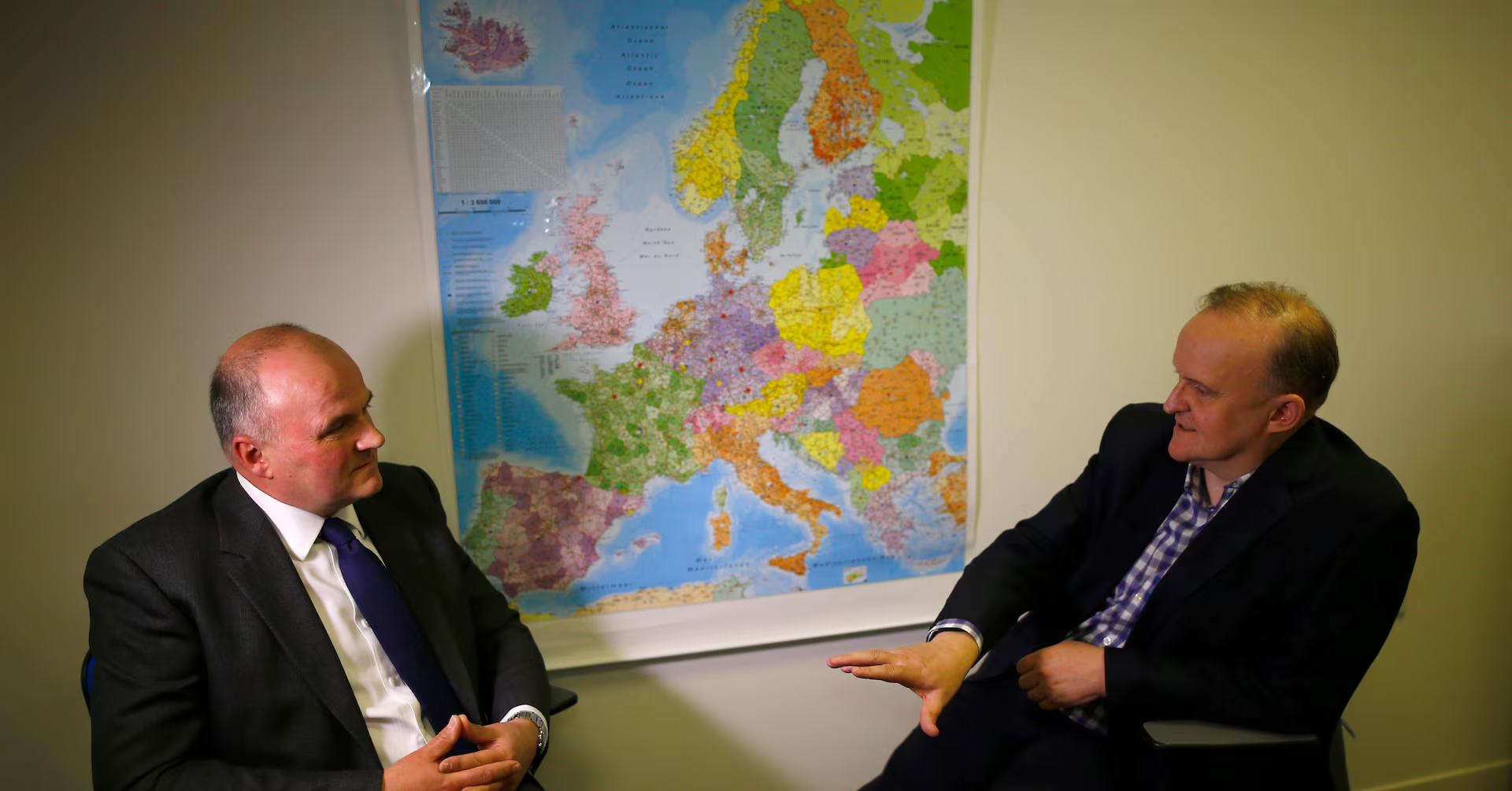
NOTTINGHAM, England, June 16 (Reuters) – Two businessmen brothers who held opposite positions on Brexit at the time of the vote are both feeling disappointed 10 years on. For one new freedoms have been squandered, while the other bemoans the complications to trade.
The disillusion felt by Nigel Baxter, who has a commercial vehicles business, and Ian Baxter, who owns a logistics company, over the UK’s departure from the European Union reflects the feeling across the country.
Almost six in 10 people now think Britain was wrong to vote to leave the EU, according to a YouGov poll on June 9. The 52% of people who voted on June 23, 2016, to leave have found out they were “sold a dream”, Ian, 60, said.
Nigel, who campaigned to leave, and is based in Nottingham, central England, said the deregulation, tax cuts and inward investment he hoped Brexit would bring have not happened, blaming the government for a lack of dynamism.
“We have failed to capitalise on something that was monumental in terms of the decision,” Nigel, 63, said.
IMPACT ON TRADE
For Ian, staying in the bloc was the pragmatic choice and the best way to ensure Britain’s prosperity and security.
There had been no “catastrophic consequences” from leaving, he said, but it had become much harder for British companies to sell goods to the EU, which remains the UK’s biggest trading partner by far.
Ironically, thanks to Brexit, Ian’s logistics business, also based in Nottingham, has grown significantly because he established a unit to provide customs services to help UK companies sell to the EU.
“It’s thriving at the cost of our customers really and their trade with the European Union which is not as strong as it otherwise would have been,” he said. “My view is still it should never have become more complicated.”
As well as being at odds over Brexit, the brothers support rival football teams, Chelsea and Arsenal, but throughout the Brexit debate they have maintained a close relationship.
That was not always the case in the wider country in 2016, when tempers flared over Brexit, with dire warnings over the economic impact of leaving, and incendiary billboard posters featuring long queues of migrants.
BREXIT BATTLEGROUND IN ANY LEADERSHIP CONTEST
Today, the mood over the historic decision is more muted, overtaken by new fractures in society, but with voters still concerned about similar issues – stagnant living standards, underfunded public services and migration.
“It’s sort of faded in my mind to be honest with you,” Nigel said.
For Ian, Brexit is still front of mind, and the issue has reemerged as a battleground in a potential leadership contest in the governing Labour Party.
He is pleased the current government, elected in 2024, has been trying to forge closer relations with the EU, but he rejects the idea of rejoining on worse terms.
“I’m not sure the EU would offer us the sweetheart deal that we had then … I doubt very much that is available and therefore I don’t see the UK rejoining the EU,” he said.
Read more Oil markets bet Trump would chicken out on Iran. They won
Read more As Europe rearms, ‘wingman’ aircraft take centre stage
Read more US-Iran deal promises end to war but how it will work remains unclear