- Summary
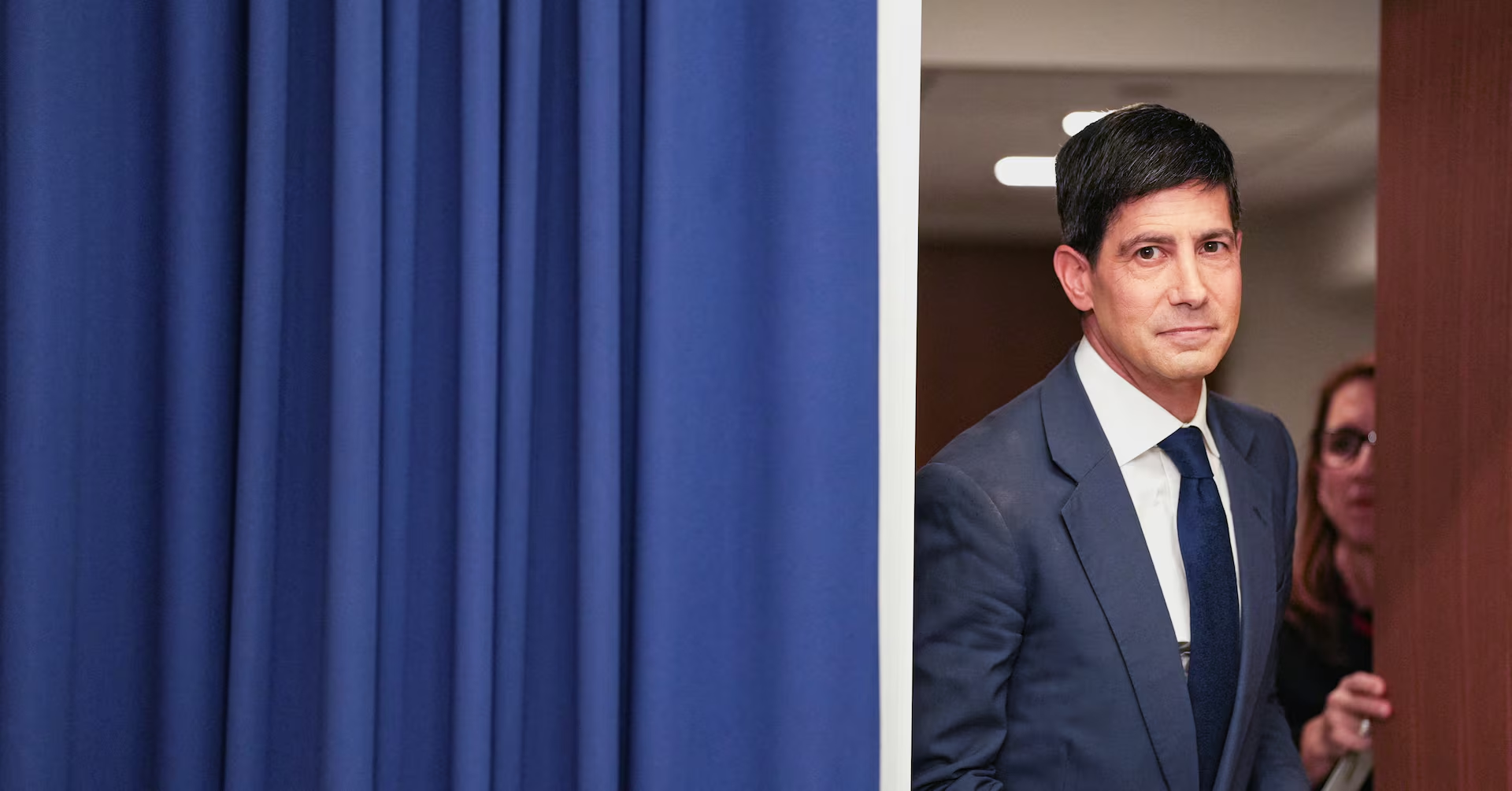
June 17 (Reuters) – Federal Reserve Chairman Kevin Warsh announced on Wednesday a wide-ranging project to review key aspects of central bank policy making, in a move that indicated any near-term moves to change how the Fed manages its massive stock of bonds lay well off in the future.
“I’m appointing a task force in each of five areas that are central to the broad conduct of monetary policy,” Warsh said in a press conference following the first interest-rate-setting Federal Open Market Committee meeting held under his stewardship.
“My expectation is the task forces will begin work in the next couple of weeks, and we’ll start to get some more information from them, some more framing of how they see things, starting in the fall, and hopefully most, if not all of them, concluding by year end,” Warsh said. “For each of these independent task forces, I’m enlisting some of the very best minds, both inside and outside the economics profession,” he added.
These panels will take a look at how the Fed approaches inflation, its communications, the use of economic data, as well as productivity and the jobs market.
One of the task forces will also look at an issue that has been at the center of Warsh’s issues with the central bank.
BALANCE SHEET BLUES
Warsh, who was a governor from 2005 to 2011, has long lamented how large the Fed’s balance sheet has become, arguing to considerable controversy that the Fed has come to own too many bonds and that’s causing harm to the economy.
Warsh believes the extensive holdings of bonds owned by the Fed, which were acquired in times of economic crisis, distort market signals and push the Fed into making decisions best left to elected officials.
A number of current Fed officials and many economists counter that the current system the Fed uses to implement monetary policy works very well at controlling short-term rates and the idea that markets are distorted isn’t accurate.
Warsh appeared to give the status quo around the Fed balance sheet issues some breathing room, as the FOMC statement noted “the Committee reaffirmed its policy of maintaining ample reserves in the banking system.”
The Fed announced last week it would continue buying Treasury bills over the next month as part of a technical bid to bolster reserves to maintain short-term rate control, which will help the size of Fed holdings grow. It’s unclear how long that buying will continue, with New York Fed officials noting future buying will be driven by market conditions.
The Fed has used aggressive purchase of bonds to stabilize stressed markets and to augment the stimulative power of monetary policy when its short-term interest rate target is set at near zero levels. It has also built up a suite of tools to control rates that depend on the financial system holding very large amounts of liquidity.
Fed holdings can only shrink so far before tight money market conditions start driving unwanted money market volatility, which limits how much overall holdings can be drawn down. There are widespread expectations that changes in liquidity rules could allow some notable reduction in the size of Fed holdings, but few wish to see a return to how the Fed conducted monetary policy 20 years ago.
Experts believe any big changes in the Fed’s balance sheet will take some time to happen given the complexity of the system.
Read more SPACs are back, thanks to Wall Street’s mega-IPO frenzy
Read more Traders now see Fed raising rates by September
Read more Wall Street loses ground slightly after first Fed statement under Warsh