- Summary
NAIROBI, June 3 (Reuters) – Around 20 flights carrying medical equipment and specialist staff have landed at a base in Kenya where the U.S. government is continuing to build an Ebola quarantine facility despite protests and Kenyan court orders blocking it, according to flight data and officials.
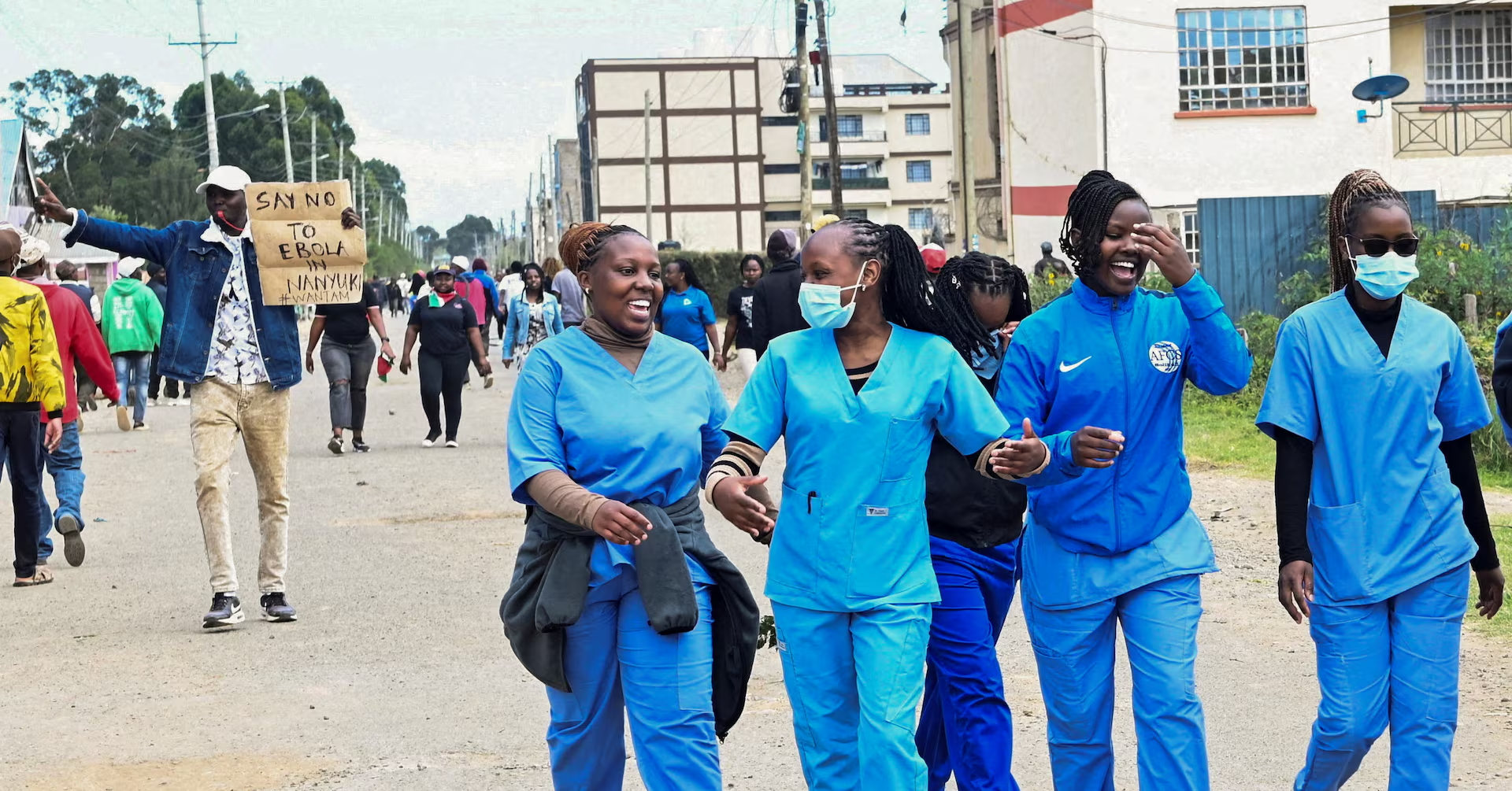
At least two people have been killed in protests in the central Kenyan town of Nanyuki, home to the Kenyan air force base where the U.S. military is building a 50-bed unit for Americans who might be exposed to the virus, which has infected hundreds in Democratic Republic of Congo and Uganda.
A U.S. diplomatic cable, part of which was seen by Reuters, said Kenya’s President William Ruto may have underestimated domestic opposition to the plan, which has triggered criticism the U.S. is offloading the risk of caring for its own patients.
A Kenyan court first ordered work on the Ebola facility to be suspended on May 28, yet U.S. military flights into Nanyuki continued in the days that followed, according to data from flight-tracking service Flightradar24.
The data showed at least six military aircraft, including C-130 and C-17 transport planes, had landed in Nanyuki since May 24, with three landing after the court order.
The planes have brought in technical equipment as well as dozens of physicians, engineers, lab experts and construction workers, but no patients, according to a U.S. official, who asked not to be identified.
The U.S. embassy in Nairobi said on Wednesday it was aware of the court action and it was “working with the Kenyan government to resolve any objections”.
Ruto has defended approving the facility, telling reporters on Monday: “We are a responsible government. We know what we are doing.” He did not comment on the court order.
EVERYONE IN, EXCEPT THE PATIENTS
Around 20 flights had landed between May 23 and May 31, according to the U.S. official and another source with direct knowledge of the matter.
“They have got everything and everyone in, except any patients,” according to the second source.
On Tuesday, a Kenyan court blocked the plan for a further three weeks and ordered the government to disclose its agreement with Washington.
But the second source said work was continuing and the facility could be ready by Thursday. “The U.S. will only stop if the Kenyan government tells them to stop,” the source added.
The U.S. official said flights were paused on Monday due to “confusion” over the court order and what it means, but the pause was lifted on Wednesday after the Kenyan authorities told U.S. officials that they could proceed with preparations.
Further supplies, including specialised equipment, testing kits and protective gear would be flown in, they said.
UNDERESTIMATING OPPOSITION TO PLAN
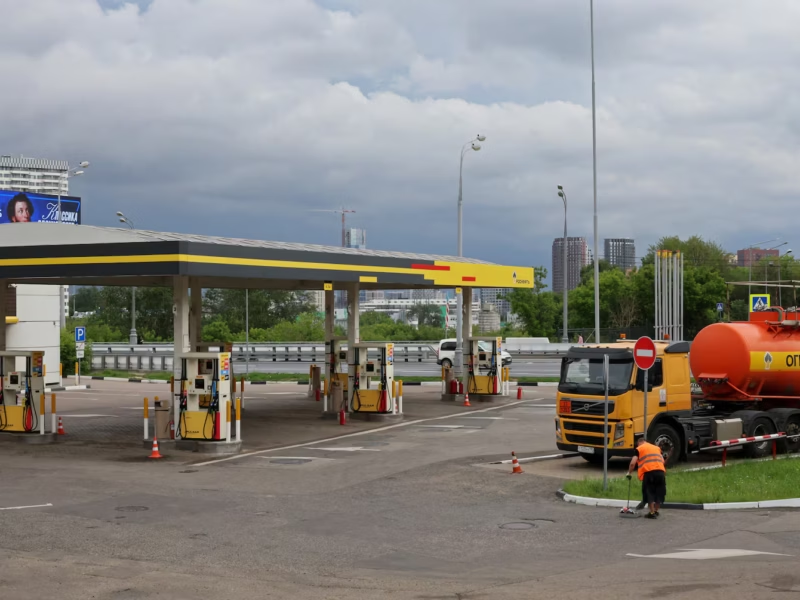
In the cable, sent to Washington on June 2 according to two U.S. officials, the embassy in Nairobi flagged that anger over the Ebola facility came on top of pressure on Ruto’s government stemming from rising fuel prices and the imminent anniversary of anti-government protests that killed dozens in 2024.
“In agreeing to host the bio-isolation facility, President Ruto may have underestimated the depth and intensity of public opposition,” the U.S. cable said.
“The continued work on the facility – despite a court injunction halting construction – has further fuelled criticism.”
Ruto said the facility was part of a wider plan to prepare Kenya for any Ebola cases and was in line with a long-running health partnership with Washington. The U.S. said last week it would provide $13.5 million for Kenya’s Ebola preparedness effort.
QUARANTINE PLAN
The U.S. State Department said on Wednesday that any U.S. citizen who was at high risk of exposure to Ebola but had not yet shown symptoms could be transported to the facility in Kenya, where they would spend 21 days in quarantine.
Anyone who developed symptoms would then be transported elsewhere for treatment, it said, without giving further details.
Kenyan government officials have repeatedly said the facility would be open to Kenyan nationals, but Trump administration officials have said it would prioritise U.S. citizens.
The plan has also met with opposition in the U.S., where healthcare officials, including former staff from the Centers for Disease Control and Prevention, have warned that such measures could discourage American frontline responders from deploying to regions affected by outbreaks and undermine global response efforts.

Ammu Kannampilly
Read more OpenAI’s Altman to urge US lawmakers not to require AI model approvals
Read more Trump’s primary endorsement winning streak just ended in Iowa
Read more Alphabet to raise $84.75 billion in upsized equity offering to fund AI ambitions